How to Use an Anion Gap Calculator for Acidosis due to Metabolism
What Is the Anion Gap?
The anion gap is a calculated value that assists clinicians interpret serum electrolytes and recognize indicators of acid-base disorder. It contrasts the main measured cations and anions in blood, especially serum sodium and serum chloride, with serum bicarbonate as part of routine serum chemistry review.
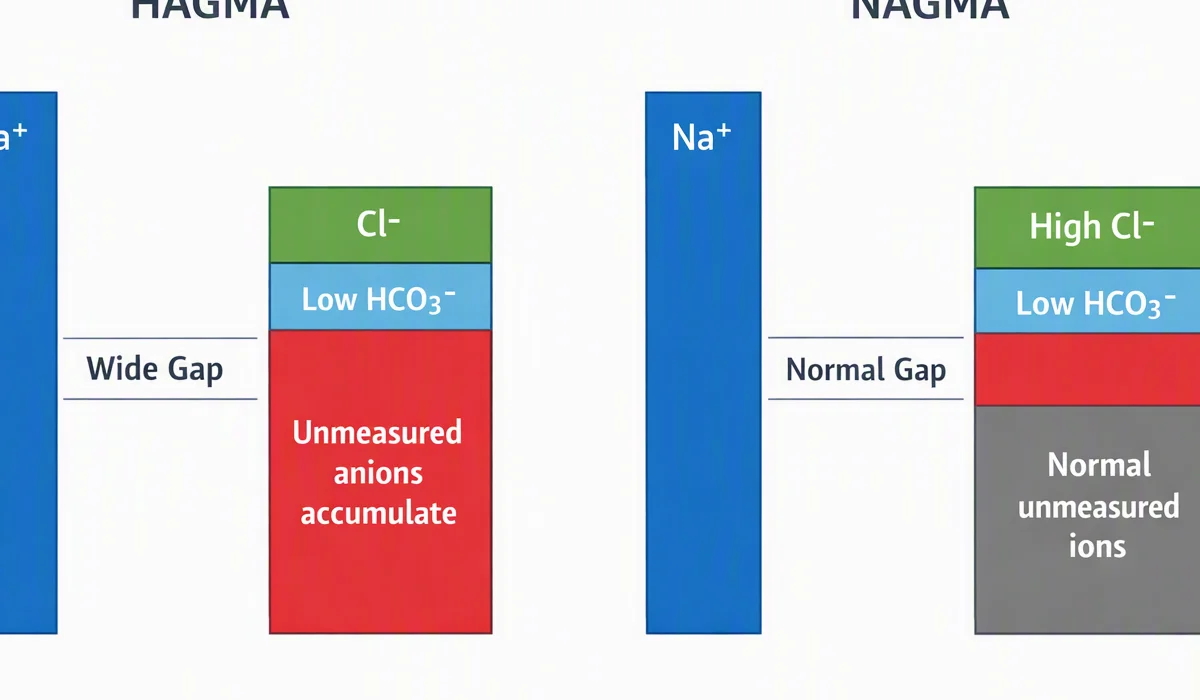
Although the name suggests a literal gap, the value represents the difference between regularly measured positively charged and negatively charged particles. That difference indicates unmeasured anions in the blood, which can increase during some types of metabolic acidosis. In practice, the anion gap is a quick screening tool for understanding acid-base balance and spotting a possible metabolic derangement.
Because the body relies on a closely regulated buffer system, even slight changes in electrolytes can signal important disease. A widened anion gap may point toward excess acids such as lactate or ketones, while a normal gap with low bicarbonate often suggests bicarbonate loss or a chloride shift. This is why the anion gap is so useful in diagnostic evaluation.
How the Anion Gap Calculator Functions
An anion gap calculator automates the calculation formula used to determine the gap between measured cations and anions. The basic version takes sodium, chloride, and bicarbonate values from a lab report. Most calculators are designed to make clinical interpretation quicker and more reliable than doing the math manually.
The standard formula is:
Anion gap = serum sodium - (serum chloride + serum bicarbonate)
This formula illustrates the relationship between the major measured ions in the bloodstream. If the result is higher than the expected reference interval, it suggests the presence of acids that are not directly measured on the panel. These may include lactate, ketones, sulfates, or other organic acids.
Many modern calculators also include albumin correction. That matters because serum albumin is a major unmeasured anion. If albumin is low, the calculated anion gap can appear falsely normal even when clinically important acidosis is present. Using an adjusted result enhances severity assessment and helps avoid missing a hidden problem.
In other words, the calculator does more than produce a number. It helps connect the number to the likely physiology behind it, supporting a more precise read on systemic acidosis and overall acid-base status.
How to Calculate the Anion Gap Step-by-Step
To calculate the anion gap manually, begin with values from a blood chemistry panel or an electrolyte panel. The key values are Na+, Cl-, and HCO3-. When you have them, apply the formula directly.
Follow these steps:
- Locate the serum sodium value, written as Na+.
- Identify the serum chloride value, written as Cl-.
- Identify the serum bicarbonate value, written as HCO3-.
- Add chloride and bicarbonate together.
- Deduct that total from sodium.
Example: if sodium is 140, chloride is 102, and bicarbonate is 22, then 140 - (102 + 22) = 16. That result may be above the usual reference interval, depending on the laboratory’s method and reporting style.
It is important to use the exact values from the lab, because small differences can change the interpretation. A blood chemistry panel is often enough to calculate the anion gap, but the context matters. If there are symptoms or additional abnormalities, the anion gap should be interpreted as part of a broader clinical assessment.
When the result is unexpectedly high or low, verify units, confirm the lab source, and review other signs of electrolyte imbalance. This calculator is a tool, not a diagnosis on its own.
Reading a Elevated Anion Gap Metabolic Acidosis
A elevated result on anion gap calculator often indicates high anion gap metabolic acidosis. This means acidic compounds have gathered in the blood, consuming bicarbonate and raising unmeasured anions. Common causes include lactic acidosis, ketoacidosis, and uremia.
In lactic acidosis, lactate accumulates when tissues are under strain or oxygen delivery is reduced. This can happen during shock, severe infection, poor perfusion, or intense physiologic stress. Lactate is an organic acid, so it contributes to the increase in unmeasured anions.
Ketoacidosis occurs when the body breaks down fat for fuel and produces ketone acids. This is classically seen in diabetes, but it can also occur with starvation or alcohol use. The low bicarbonate and increased acids create a typical pattern of metabolic acidosis.
Uremia, which develops with impaired renal function, can also raise the anion gap. When kidneys cannot eliminate acids adequately, retained solutes contribute to systemic acidosis. In these cases, the calculator result should be paired with renal studies, blood gas analysis, and the overall clinical picture.
Elevated anion gap results should prompt a careful diagnostic evaluation for the underlying source of acid accumulation. The key question is not only whether the gap is elevated, but why. That distinction guides urgency, treatment, and monitoring.
Normal Anion Gap Metabolic Acidosis Overview
A standard value does not eliminate metabolic acidosis. It may instead suggest normal anion gap metabolic acidosis, also referred to as hyperchloremic acidosis. In this process, bicarbonate is depleted, and chloride rises to maintain electrical neutrality.
Diarrhea is among the leading causes. The gastrointestinal tract can shed large amounts of bicarbonate, leading to acidosis with a compensatory increase in chloride. This is a typical example of a chloride shift that keeps the anion gap from widening.
Renal tubular acidosis is another significant cause. In this disorder, the kidneys do not acidify urine correctly or cannot reabsorb bicarbonate well. The result is a non-gap acidosis that may be easy to miss unless electrolytes are assessed carefully.
Normal anion gap acidosis can also occur with specific intravenous fluids or renal losses, so the surrounding context matters. If the calculator output is normal but bicarbonate is low, consider whether the picture fits hyperchloremic bicarbonate loss rather than build-up of unmeasured acids.
Recognizing this difference helps separate high gap conditions from non-gap conditions, which is essential for accurate acid-base disorder classification.
Corrected Anion Gap and Adjustment for Albumin
Albumin is a key unmeasured anion, so variations in serum albumin can strongly affect the anion gap. When albumin is low, the measured gap can seem normal even in the presence of clinically important acidosis. That is why the corrected anion gap is often more useful than the raw value.
Hypoalbuminemia lowers the baseline anion gap. If this is not accounted for, a patient with lactic acidosis or another high-gap process may be misclassified as having a normal gap. Albumin correction helps expose hidden acid accumulation and improves clinical interpretation.
A useful bedside approach is to adjust the gap for the measured albumin value before deciding whether the result is truly abnormal. Many calculators do this automatically, which is especially helpful during rapid blood gas analysis or emergency diagnostic evaluation.
The delta gap is another important concept in this setting. It compares the change in the anion gap with the change in bicarbonate to help identify mixed disorders. For example, a markedly elevated gap with a smaller-than-expected bicarbonate drop may suggest a concurrent metabolic process. This makes the delta gap important for deeper acid-base interpretation.
In practice, corrected values are most useful when a low albumin level could hide the true severity of the disorder. That is one reason the corrected anion gap is central to modern calculator-based assessment.
Common Origins of an Unexpected Anion Gap
An abnormal result may suggest many multiple issues, and the cause depends on whether the gap is raised, normal, or changed by albumin status. Typical high-gap causes include toxic alcohols, salicylates, renal failure, and sepsis.
Toxic alcohols such as methanol or ethylene glycol generate acids that raise the gap and can lead to severe metabolic acidosis. These poisonings require urgent recognition because they may result in neurologic, renal, and visual injury.
Salicylates can produce a complex acid-base picture, often including respiratory and metabolic features. They are important because they may present with a high anion gap and other findings that make the overall picture harder to interpret than a simple one-lab interpretation.
Renal failure can lead to acid accumulation and reduced clearance of unmeasured acids. As kidney function worsens, the anion gap may go up, and the laboratory pattern can reflect worsening renal function and uremic toxin retention.
Sepsis is another major cause because tissue hypoperfusion can promote lactate generation and produce lactic acidosis. In that setting, the calculator output should be matched with hemodynamic status, infection markers, and the overall extent of illness.
Because different causes can coexist, the abnormal gap should be viewed as a clue, not a final answer. The next step is always to connect the number with symptoms, exposure history, and other laboratory findings.
Restrictions of Anion Gap Calculation
While the anion gap is valuable, it has important drawbacks. Lab variation can affect the result, because different analyzers, measurement methods, and calibration standards may alter the reference range. A value deemed abnormal in one lab may be less concerning in another.
A further limitation is that the calculation does not directly measure all physiologically important ions. Changes in ionized calcium and magnesium can affect overall electrolyte balance, but they are not part of the standard formula. This means the anion gap is only one part of the acid-base picture.
The test also does not substitute for a full clinical assessment. A patient may have symptoms of acidosis despite a normal gap, or a mild gap elevation may not be clinically significant if the https://anion-gap-guide288.inkharbory.com/posts/anion-gap-calculator-for-corrected-bicarbonate-interpretation rest of the picture is reassuring. Context matters more than the number alone.
In addition, the gap can be affected by protein changes, measurement artifacts, and mixed disorders. For this reason, it is best used as a support tool alongside serum chemistry, blood gas analysis, and the rest of the diagnostic evaluation.
When to Employ an Anion Gap Calculator
An anion gap calculator is especially helpful when evaluating suspected acid-base disorders or unexplained low bicarbonate. It is commonly used after results from an arterial blood gas or basic metabolic panel become available, especially when the clinician wants to distinguish high-gap from normal-gap acidosis.
The calculator is particularly useful when there is concern for metabolic acidosis, unexplained respiratory compensation, or a possible mixed disorder. It can help sort out whether the likely pattern is high anion gap metabolic acidosis or normal anion gap metabolic acidosis, which changes the differential diagnosis and treatment plan.
Use calculator during the medical assessment of individuals with changes in mental status, volume depletion, circulatory collapse, kidney dysfunction, poisoning concerns, or significant electrolyte abnormalities. It is also valuable when checking whether low albumin may be obscuring the true degree of acidosis.
For best results, interpret the calculator output alongside the patient’s clinical history, exam findings, and serial blood test values. That method improves detection of acid-base balance problems and aids better decision-making in the moment.
FAQ
What is the anion gap calculator used for?
The anion gap calculator is used to assist with interpreting metabolic acidosis by comparing measured electrolytes and estimating the amount of unmeasured anions in the blood. It is used to differentiate high anion gap metabolic acidosis from normal anion gap metabolic acidosis and supports clinical interpretation of abnormal serum chemistry values.
How do you calculate the anion gap from sodium, chloride, and bicarbonate?
Apply the formula: anion gap = serum sodium - (serum chloride + serum bicarbonate). In lab notation, that is often written using Na+, Cl-, and HCO3-. This calculation can be done by hand or with an anion gap calculator.
What does a high anion gap mean in metabolic acidosis?
A high anion gap usually means there are additional unmeasured acids in the blood, which is common of high anion gap metabolic acidosis. Common causes include lactic acidosis, ketoacidosis, uremia, toxic alcohols, and salicylates. It should always be viewed in the context of the patient’s overall condition.
Why do you correct the anion gap for albumin?
You modify the anion gap for albumin because hypoalbuminemia can make the gap look falsely unremarkable. Since albumin is a major unmeasured anion, a low level can mask a true increase in acids. The corrected anion gap gives a more precise view of the acid-base status.
What leads to a normal anion gap metabolic acidosis?
Frequent causes of normal anion gap metabolic acidosis include loose stools and renal tubular acidosis. This disorder is also called hyperchloremic acidosis because chloride increases as bicarbonate falls. It reflects bicarbonate loss or reduced acid excretion rather than a buildup of unmeasured acids.